Educating Governments, children and communities about lions
Our founders are at the forefront of lion conversation research and dedicate their time to learning about lions in order to make the best possible recommendations to governments and African communities about how to protect lions in the wild from natural threats like disease and man-made threats such as habitat loss and canned hunting.
We’re experts when it comes to lion biology and have done extensive research into threats such as the highly contagious Canine Distemper Virus (CDV) and Feline Immunodeficiency Virus. These have a strongly negative impact on the function of a lion’s immune system, reproduction and survival of lions in the wild. These, amongst others, must be addressed in overall conservation priorities of endangered species.
Lion Population
The time LionAid has spent in Africa and working with African governments has given us great insight into the reality of lions still existing in the wild. Our research into wild lion numbers helps us give governments a sense of urgency when it comes to protecting prides.
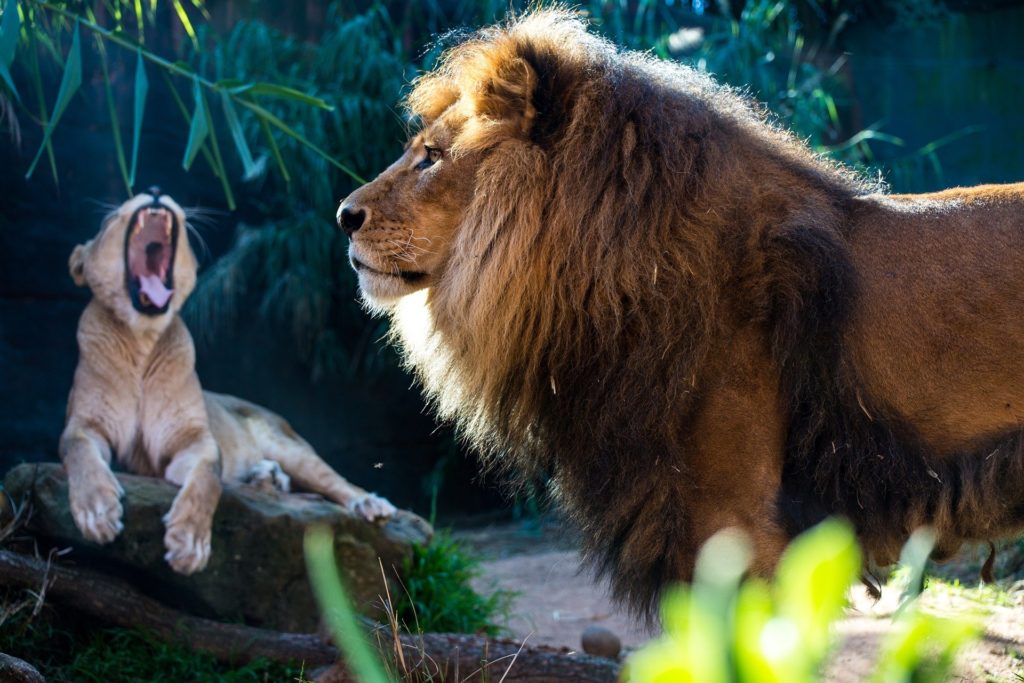
Photo: Martin Fowkes
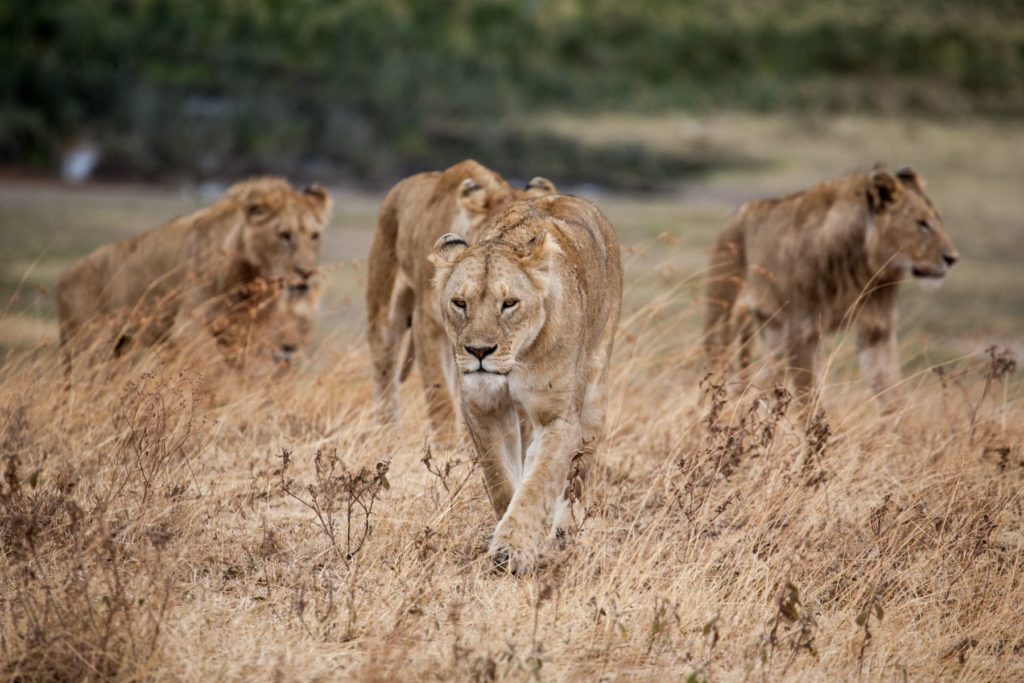
Photo: Jeff Lemond / Unsplash
Community
A growing human population in Africa demands land, and through the many decades, wildlife has had had to give way. Our research has found ways that local communities can live more peacefully beside lion populations and therefore decreasing the number of lions killed due to their killing of livestock, a key source of income for local communities.
African Lion Trophy Hunting and Nose Colour
We assess a simulation model that proposed a sustainable trophy hunting method for African lions based on a long-term study of lion biology in Tanzania. According to the model, lion age could be reliably estimated using nose colour, because lion noses in Tanzania darkened “predictably” with age.
By limiting off-take to only those males with noses greater than 50% black, hunting could theoretically be restricted to animals of an appropriate age. We provide information based on a 10+ year study in Botswana showing no statistically significant pattern of nose darkening with age for southern African lions.
In addition, we show that male reproductive parameters in our study population differ significantly from those in the Tanzanian population, making the trophy hunting proposal deeply flawed.
Lions as a UNESCO World Heritage Species
LionAid would like to introduce the concept of an Iconic Heritage Species. Such wild species would come under the UNESCO umbrella of protection as considered important in terms of special international attention to conservation. The United Nations Educational, Scientific and Cultural Organization (UNESCO) has a programme to conserve sites of exceptional cultural or natural importance to the common heritage of humanity.
These species… would need to be interlinked with world culture through symbolism, iconography, imagery, allegory, literature, totems, fables, art, and so forth. In fact, criterion six of the World Heritage Site qualification list already expresses this well – “to be directly or tangibly associated with ideas, or with beliefs, with artistic and literary works of outstanding universal significance”. Meaning lions, in our opinion, absolutely fit the bill!
We use cookies to ensure that we give you the best experience on our website. If you continue to use this site we will assume that you are happy with it.