|
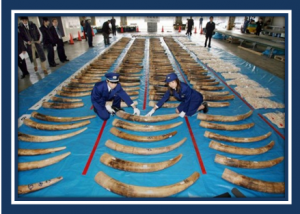
Illustrative image: seized elephant tusks awaiting cataloguing.
Disturbing news has reached us from the field, reported by the Environmental Investigation Agency (EIA): twenty elephant tusks have reportedly been seized in northern Botswana in late May, in a case linked to Zambian poachers.
As yet, no arrests have been made.
What we know
According to the EIA, the seized tusks weigh between roughly 24kg and 42kg each. That is not a haul of trinkets. Tusks of that size come from older, established animals, and twenty of them represent the killing of at least ten elephants. Ten more lives stolen from a continent that can no longer afford the loss.
A pattern we have seen before
This seizure does not stand alone. It follows hard on the heels of major ivory seizures in Zambia and Tanzania. Taken together, the EIA warns, these cases are clear evidence that wildlife trafficking networks remain active right across the Southern African Development Community (SADC) region, and may be scaling up their operations once again.
For those of us who have watched the ivory trade for decades, the warning signs are painfully familiar. When the criminal networks grow bolder, the body count rises. And while elephants are the victims in this case, the same syndicates, the same smuggling routes and the same gaps in enforcement are what put lions, rhinos and so much else at risk too. The illegal wildlife trade does not respect species boundaries, and nor can our response to it.
Why no arrests should worry us
Twenty tusks seized and not a single arrest tells its own story. Seizing the ivory matters, but it is the people behind the trade who must be caught, prosecuted and stopped. The EIA is right to stress that the answer lies in intelligence-led operations, thorough investigations and genuine cooperation between countries across the region. Poaching is organised, cross-border crime, and it can only be beaten by organised, cross-border enforcement.
What this means
Every seizure is a small victory and a large tragedy at the same time. A victory because the ivory will not reach the market. A tragedy because the elephants are already dead. The real measure of success is not how much ivory we intercept, but how many elephants we keep alive in the first place.
LionAid will keep pressing, alongside partners like the EIA, for the sustained investment in enforcement and regional cooperation that the situation demands. The networks are patient and well resourced. We have to be more determined than they are.
This is not new ground for LionAid
The ivory trade has been on our radar for many years. We asked what happened to the money from Botswana’s 2008/2009 CITES-approved ivory sales to China and Japan, reported the toll when 100,000 elephants were killed in three years, argued that one of the most practical ways to disrupt the trade is to test the ivory being sold, and looked at what should be done with confiscated stockpiles. The names and the seizures change; the underlying problem does not.
You can read the EIA’s full analysis of the re-emergence of the SADC region in the ivory trade here.
With thanks to the Environmental Investigation Agency for their continued work exposing the ivory trade.
|