


News
Latest Lion Aid News
The Uncomfortable Truth About Trophy Hunting: The Numbers the Documentary Left Out
Wednesday 3rd June 2026
|
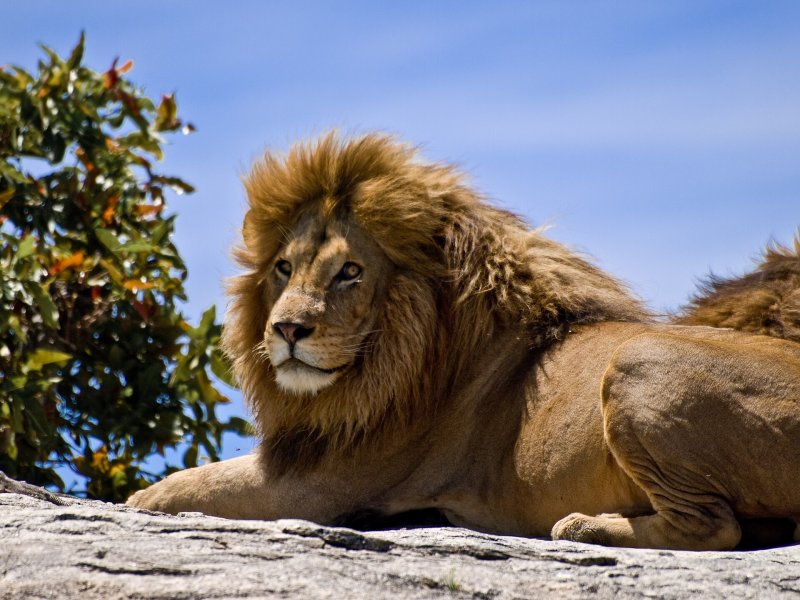
A new documentary, The Hunt: Into The Grey, has the environmental journalist Sarah Roberts learning to shoot a springbok in Namibia and concluding that trophy hunting is “not black and white”. The Telegraph has given it a long and sympathetic write-up. We agree the issue is not black and white. It is worse than the film lets on, and the reason has nothing to do with how complicated anyone finds it. It has to do with what the evidence actually shows. Here, point by point, is the part of the conversation the documentary leaves out. The revenue claim that falls apart The headline figure is Alex Oelofse of Mount Etjo saying his property needs 63 tourists to match the turnover of one hunter. Notice the word “turnover”. One client paying a large fee for a single animal does make a big number on one invoice. That is not the same as a sector that supports an economy. When economists looked at the whole industry rather than one lodge’s best day, the picture reversed. Economists at Large found that across the African countries studied, trophy hunting came to just 1.8 per cent of tourism revenue, and that hunting companies passed only about 3 per cent of their income to the communities living in the hunting areas. A follow-up report found trophy hunting accounts for 0.76 per cent or less of tourism employment. The big cheque is real. What reaches the people and wildlife it claims to protect is almost nothing. None of this is new to us. Back in 2010, LionAid’s co-founder Pieter Kat asked the same question and reached the same answer: do community-based wildlife management programmes actually benefit the communities? Allocated is not the same as protected Roberts says more than 500,000 square miles benefits from trophy hunting, exceeding the protected national parks. That much land is allocated to hunting. Allocated is not the same as benefiting, and the industry’s own retreat proves it. A 2019 study for the IUCN’s protected-areas programme found that 110 of Tanzania’s 154 hunting blocks, 72 per cent of them, had been abandoned because too few animals were left to make them pay. That is around 140,000 square kilometres given up, roughly four times the size of Tanzania’s national parks. Land set aside for hunting only “benefits” wildlife while the wildlife is still there. Our co-founder Pieter Kat went through the wider picture in are there really any benefits to trophy hunting?, including the way blocks are handed back once there is nothing left worth shooting. “It pays it stays” has presided over the collapse This is the slogan, so measure it against its own results. The IUCN records that lion numbers in Africa fell by about 43 per cent between 1993 and 2014. Lions now survive in only about 7 to 8 per cent of their historic range, are already extinct in 26 of Africa’s 48 lion-range countries, and on LionAid’s own 2025 assessment number barely 13,000 across the whole continent: about 13,014 in eastern and southern Africa and just 342 in the west and centre. That did not happen in spite of the hunting model. It happened across the countries that run it, during the decades it ran.
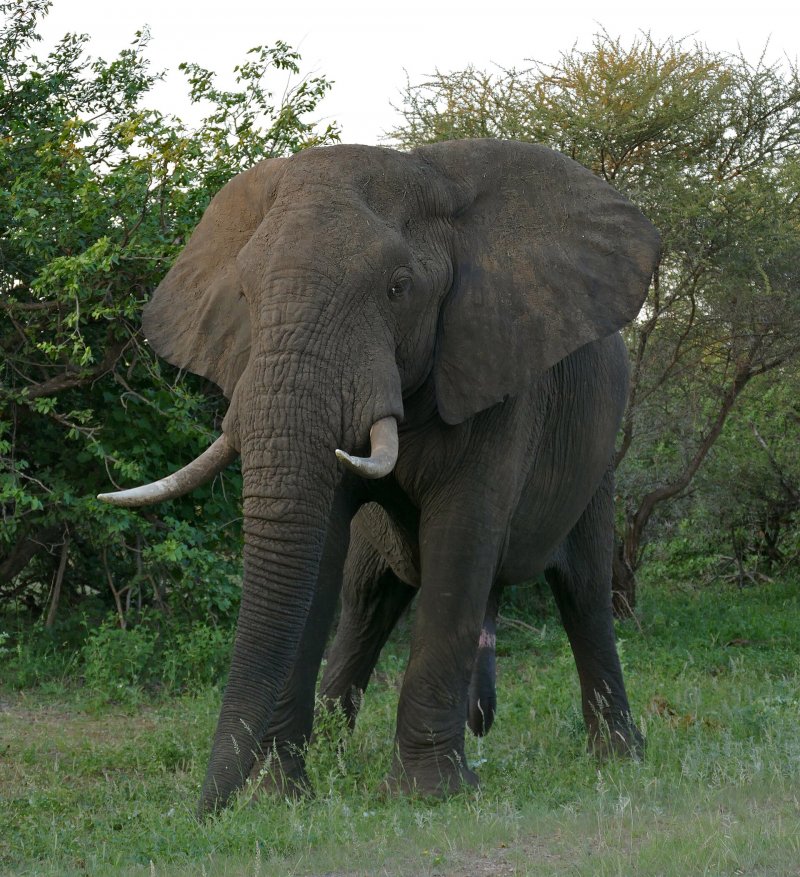
The film points to southern Tanzania as proof that losing hunting revenue leads to poisoning and snaring. Southern Tanzania, including the Selous, was one of the largest hunting estates on the continent, with 44 of the reserve’s 47 blocks allocated to hunting. Its elephants fell from more than 100,000 to about 13,000 by 2013, and a study led by Craig Packer found lion harvests across Tanzania fell by half between 1996 and 2008, with the most heavily hunted areas declining fastest. If “it pays it stays” worked anywhere, the Selous would be the showpiece. It is the opposite. “Culling” is the word that sells the hunt The article slips in a line that deserves a hard stop: “Culling is often a sad necessity so why not raise revenue in the process?” This is how a management tool becomes a product. Culling, dressed up as Problem Animal Control or PAC, is the legal mechanism for removing an animal said to be a danger to people or livestock. In practice those permits are routinely sold to trophy hunters. Once a dead “problem” lion or elephant can be turned into a paid trophy, the incentive is no longer to solve the conflict. It is to find more problems to sell. PAC gives a hunt the language of necessity and a price tag at the same time. “Why not raise revenue in the process” is exactly the thinking that turns conservation into a sales catalogue. The biology the quotas ignore There is a reason shooting lions is not like shooting anything else. Hunters want the big males with the dark manes, and those are the breeding males holding prides together. When a resident male is killed, incoming males commonly kill his cubs to bring the females back into season, so one trophy can cost a pride a whole generation. The biology was documented in 1983. A study in Hwange, the reserve Cecil came from, carried out by Oxford’s WildCRU, a group that accepts a role for well-regulated trophy hunting, showed that shooting males along the park edges drew males out of the protected core and triggered exactly this cub-killing inside the park. When even hunting’s own scientific supporters document the damage, it cannot be brushed aside as the opinion of campaigners. Research in Nature showed lion hunting can only be sustainable if no male under about six years old is shot. Quotas across Africa are still set without the population counts needed to know whether they meet that bar, or any bar at all. In truth there has been no proper lion census across most of Africa for decades. The figures everyone quotes, ours included, are careful estimates rather than counts, and on hunting land the operators will not let anyone carry one out. The difference is that LionAid’s 2025 assessment sets out its workings country by country and states its caveats, while the industry simply asserts that its quotas are sustainable and refuses the surveys that could test the claim. Scotland is not the gotcha they think The “hypocrisy” charge says Britons tolerate red deer stalking in Scotland, so they cannot object to lion hunting in Africa. This only works if you ignore the animals. Red deer in Scotland are abundant to the point of ecological damage and are not threatened with extinction anywhere. Lions, elephants, leopards and rhino are. Reducing an overpopulated species that has lost its predators is a different act from paying to shoot a member of a species in steep decline and shipping its head home. Calling both “hunting” does not settle the argument. It avoids it. Who is really being paternalistic The film’s strongest move is to call opposition colonial paternalism, rich Westerners deciding the fate of people far away. Look at who is in the photographs. The client flying in to shoot an African lion is, overwhelmingly, a wealthy foreigner, and the profit flows to operators and officials, much of it offshore, while the community is left with a fraction of the fee and a carcass. That is the colonial arrangement, not the objection to it. We are not asking African communities to carry the cost of conservation for our comfort. We are saying the money the industry promises them mostly never arrives, and that there are better alternatives when they are funded and built. “There is no alternative” is the oldest line in the book, and it is usually said by the people who benefit from there not being one. Roberts says she made the film as a conversation starter rather than to give an answer. Here is our contribution. The honest debate is not “hunting or nothing”. It is why, after decades of “it pays it stays”, the populations it promised to protect have halved, where the money really goes, and what it would take to fund conservation that does not depend on a foreign visitor paying to kill the headline animal. That is the uncomfortable truth. It is not that conservation is complicated. It is that the complication is being used to defend a model the evidence has already failed. LionAid will keep making this case with the figures in front of us, because the animals do not get a second species to lose. Tags: lions, Namibia, trophy hunting, Tanzania, elephants, conservation, culling, PAC, economics Categories: Trophy Hunting, Population declines |
Posted by Chris Macsween at 17:58
No comments have been posted yet.
Add a new comment
Existing user
New user sign up


