
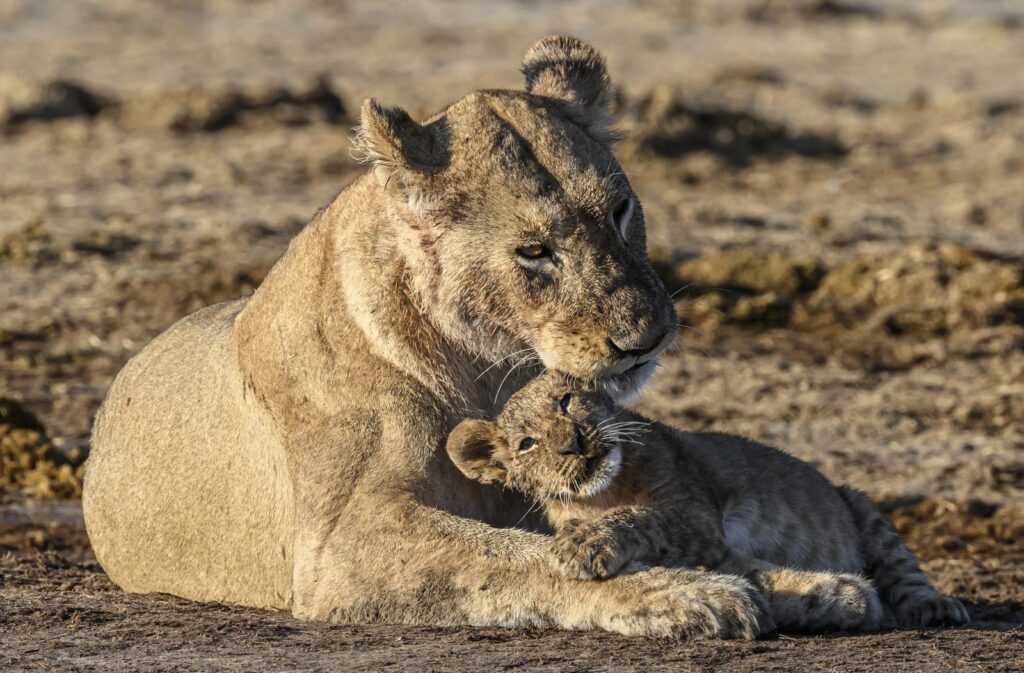
Let us provide some background. World Lion Day (WLD) was initiated in 2013 to raise public awareness about the plight of lions in Africa. And it is shocking indeed to realize how one of the world’s most iconic species has been allowed to decline due to our lack of attention. There are now fewer wild lions than rhinos, elephants, chimpanzees, orang-utans, lowland gorillas and polar bears. The reasons are numerous and varied – loss of habitat, disease, human/lion conflicts and trophy hunting.
How many lions are left? Estimates vary; we say about 15,000 and others about 35,000. The high estimates are largely based on “surveys” by vested-interest groups wanting to continue trophy hunting. Another “survey” was done using satellite images to look at available habitat and then “extrapolating” lions into the savannas, where field work suggests they do not exist.
About a year ago we decided to take all the available literature on actual lion surveys, combine that with a comprehensive conservation rating of African lion range states, and come up with a minimal estimate of lions. The results were truly shocking. Of 49 continental African countries, lions are extinct in 25 and barely exist in 10. Only 14 countries can claim to have any reasonable numbers of lions left. Hence our estimate of 15,000 lions.
The situation is especially bad in western Africa, where lions are now estimated to occupy only 1% of their ancestral range. One population of any size remains – 350 or so lions in a transfrontier area shared between Benin and Burkina Faso. These western African lions should be classified as highly endangered, not only because of their low numbers but also because they are genetically very different from lions in eastern and southern Africa – in fact, they are more closely related to lions in India.
And yet they are still hunted for trophies.
Lions remain the only big cat species not listed on Appendix I of CITES, despite a very significant trade in trophies. Over the ten years 2003-2012 a total of 3,561 wild lion trophies were exported from Africa, the majority of those adult males. In addition, South Africa exported 6,646 lion trophies, virtually all from captive bred sources.
Lions also continue to suffer from retaliatory killings – true numbers are unknown but are at least equal to trophy hunting numbers. All this while innovative methods are available but lacking funds to reduce predator/livestock conflicts.
What is needed for wild lions?
Better protection by legislation nationally and internationally, a cessation of additional and unnecessary mortality through trophy hunting, a much better understanding of how many lions remain by dedicated and honest surveys, and a realization that time is rapidly running out for one of the world’s most iconic species if we continue to remain complacent.
On the 15th March, we were delighted to see so many people across the world coming together to protest against the practice of captive breeding for canned lion hunting in South Africa. In London alone, we had over 1,000 people with us and the atmosphere was positive and joyous. Together, we all felt, we could make a big impact on raising awareness about this sordid trade.
Deserving as that single issue might be, tackling canned hunting alone, it will not make a significant difference for the overall decline of Africa’s wild lions.
Hence we have become deeply disturbed by a number of unsubstantiated messages criticising World Lion Day, which have been broadcast across twitter and some Facebook pages.
We are particularly concerned by the campaign which has attempted to spuriously associate World Lion Day with hunting, cub petting and lion walking. Organisations showing support for WLD have been maliciously termed “dubious “and “unethical”, and a strong message has gone out to tell people NOT to support WLD. This is irresponsible, in our view, and certainly not in the best interests of lion conservation. All of the groups associated with WLD (over 24 charities at the last count) are incorrectly discredited by this action and is denying them the chance to raise awareness and donations for their work. This is unjustifiable.
WLD must continue. Those who do not agree with the particular aims of any organization listed on the WLD page can express concerns by simply not donating funds to such organizations. WLD is NOT an organization that collects funds to distribute among those that signed up, it is simply an international day of celebration through which individuals can come together to act to save our most iconic of species, the lion.
Therefore, for the sake of overall lion conservation rather than single issue politics, we urge you to support those organizations you consider deserving on World Lion Day.